
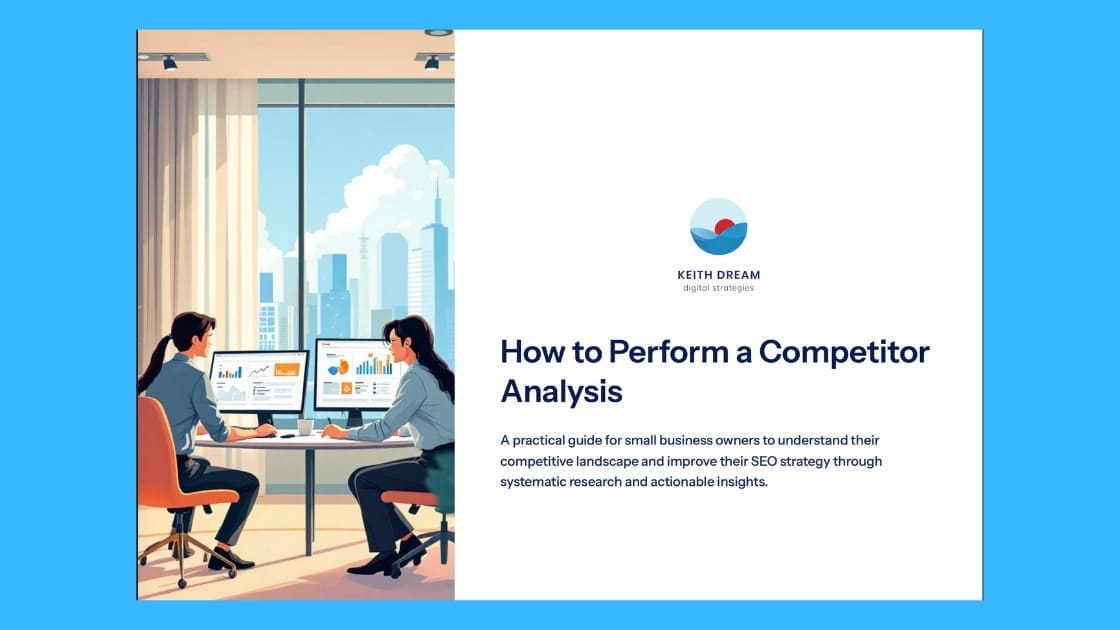
How to Perform a Competitor Analysis
A step-by-step interactive guide for small business owners to DIY their SEO strategy. No expensive tools required
Pro Tip
Don't just copy your competitors. Use this data to identify what they are missing so you can do it better.
Get Started on your checklist now and start seeing real SEO results!
Scroll down below the checklist to get your own downloadable PDF checklist.
STEP 1
Identify Your Main Competitors
Start by listing 5-10 businesses that compete with you for the same customers online.
Instructions
Search for your main products/services on Google and note who appears on the first page.
Ask your customers which other businesses they considered before choosing you.
Look for businesses in your industry with similar offerings but potentially different locations.
Action Checklist
Google your main service keywords
List 5 direct competitors
Add them to your tracking database
STEP 2
Gather Basic Information
Build a profile for each competitor to understand their online presence.
Instructions
Name:
The business name.
Website URL:
Their main address.
Content Types:
Do they use blogs, videos, case studies?
Content Frequency:
How often do they publish?
Action Checklist
Log competitor URLs
Identify their primary content format
Check their blog dates for frequency
STEP 3
Research SEO Metrics
Use free tools to find key performance indicators.
Instructions
Domain Authority (DA): How authoritative is their site?
Organic Keywords: What are they ranking for?
Backlink Count: How many other sites link to them?
STEP 4
Analyze Social Media
Evaluate their audience engagement and platforms.
Instructions
Check active platforms (FB, IG, LinkedIn).
Note follower counts and engagement rates.
Observe which content gets the most likes/comments.
Rate their presence (1-5 stars).
Action Checklist
Check Facebook
Check Instagram
Check LinkedIn
STEP 5
Identify Strengths & Weaknesses
Determine where they excel and where they fall short.
Instructions
Key Strengths: Content quality, UX, product range.
Areas to Target: Slow site? Bad mobile view? Content gaps?
Find the 'Gap': What are they missing that you can provide?
Action Checklist
List the gaps between your site and theirs that you can provide.
STEP 6
Apply Insights to Checklist
Turn your research into an actionable strategy.
Instructions
Add their ranking keywords to your strategy.
Address content gaps they missed.
Improve technical areas (speed, mobile) where they fail.
Experiment with content types that work for them.
Action Checklist
Create or update your keyword strategy
Improve your tech
Determine content types that you want to adjust in order to complete.
STEP 7
Regular Updates
SEO is ongoing. Keep your data fresh.
Instructions
Update competitor entries quarterly.
Note major strategy changes.
Track metric changes over time.
Action Checklist
Create your SEO checklist and cadence
Follow SEO checklist regularly
Why Competitor Analysis Matters for Your SEO Strategy
Understanding what your competitors are doing online gives you a roadmap for your own SEO efforts. Rather than guessing which keywords to target or what content to create, competitor analysis shows you what's already working in your industry.
When you analyze competitors online, you discover opportunities they've missed and strategies you can adapt for your own business. This research helps you make informed decisions about where to invest your time and resources.
For more advanced SEO strategies, check out our guide on Understanding Entities in SEO to learn how modern search engines understand content beyond just keywords.
How to Use Your Competitor Analysis Data
Once you've gathered data on your competitors, the next step is putting that information to work. Here's how to turn insights into action:
Identify Content Gaps
Look for topics your competitors haven't covered or questions they haven't answered. These gaps represent opportunities for you to create valuable content that fills a need in your market.
Improve Your Technical SEO
If competitors have slow loading times or poor mobile experiences, you can gain an advantage by optimizing these areas on your own site. Make sure your pages load quickly and there are no broken images or links when viewing from desktop and mobile devices.
Build a Smarter Keyword Strategy
Use competitor keyword data to inform your own strategy, but don't just copy what they're doing. Look for related keywords with less competition where you can establish authority more quickly.
Free Tools: Google Search Console shows you which keywords your site already ranks for, while Ubersuggest offers limited free searches to discover competitor keywords and search volumes.
Paid Tools: SEMrush and Ahrefs provide comprehensive competitor keyword analysis, showing keyword difficulty scores, search volumes, and content gaps. Both tools reveal which keywords drive traffic to competitor sites and identify opportunities where you can rank more easily.
Using SWOT Analysis to Organize Your Findings
A simple SWOT framework helps you organize competitor insights into actionable categories. You don't need to overthink this - just sort what you've discovered into four buckets:
Strengths - What they do well (superior content quality, strong brand authority, excellent user experience)
Weaknesses - Where they fall short (thin content, poor mobile experience, slow site speed, limited customer reviews)
Opportunities - Gaps you can exploit (topics they haven't covered, keywords they're missing, content formats they're not using)
Threats - What they could do to your market position (their strong backlink profile, large social following, or comprehensive content coverage)
Keep your SWOT analysis simple. The goal is clarity, not perfection. Once you've sorted your findings, focus your energy on the opportunities section - that's where you'll find your competitive advantage.
Real-World Examples
Business Coach in San Francisco (International Audience)
A San Francisco-based business coach serving international clients might discover their competitors focus heavily on local SEO but ignore international time zones in their content. The opportunity? Create content specifically addressing challenges of coaching across time zones, offering flexible scheduling, and building global communities. While competitors optimize for "business coach San Francisco," you could target "international business coaching" or "remote executive coaching worldwide."
Voice and Acting Studio in Vancouver
A Vancouver voice and acting studio analyzing local competitors might find that most studios showcase their facilities but few demonstrate teaching methodology or student success stories. The gap? Create detailed content showing your coaching approach, student progression videos, and testimonials with specific results. While competitors list services, you could create guides like "How We Help Shy Students Find Their Voice" or "What to Expect in Your First Month of Voice Training."
Common Mistakes to Avoid
Copying Instead of Innovating
Don't replicate what competitors do - identify what they're missing. Your goal is to find gaps and fill them better than anyone else.
Analysis Paralysis
Start with one competitor this week. Perfect data isn't necessary - good enough insights lead to action. Don't let the research phase prevent you from implementing improvements.
Ignoring Your Unique Strengths
Competitor analysis reveals opportunities, but your business has unique advantages competitors lack. Balance external research with internal confidence in what makes you different.
Remember:
Only you can offer what you offer, the way you offer it.
One-Time Analysis
Markets change quickly. Set a quarterly reminder to refresh your competitive intel. What's true today may shift in 90 days.
Focusing Only on Direct Competitors
Sometimes your biggest threat comes from an adjacent market or a new approach you haven't considered. Cast a wider net occasionally to spot emerging competition.
Resources to Get Started
Ready to put this into practice? We've created tools to make competitor analysis simple and systematic.
Try the SEO Command Center for Notion
Want a complete system for tracking competitors, managing SEO tasks, and measuring progress? Our SEO Command Center Notion template includes competitor tracking databases, SEO task lists, and progress dashboards. It's the system we use internally and with our own clients for all our SEO work.
Get the Free PDF Guide
Get our printable competitor analysis worksheet that walks you through each step with space to track your findings. Perfect for offline research sessions.
Frequently Asked Questions
What is competitor analysis in SEO?
Competitor analysis in SEO is the process of researching and evaluating the online strategies of businesses that compete with you for the same customers. This includes analyzing their keywords, content, backlinks, social media presence, and technical performance to identify opportunities for your own SEO strategy.
How often should I perform a competitor analysis?
You should review your competitor data quarterly to track changes in their strategies and performance. However, conduct a full competitive analysis steps review at least twice per year to identify major shifts in your competitive landscape and adjust your strategy accordingly.
What free tools can I use for competitor analysis?
Several free tools work well for DIY competitor analysis, including Ubersuggest for keyword research, Moz's free Domain Authority checker, Google Search Console for your own site data, and manual analysis of competitor websites. These tools provide enough data to create an effective competitor analysis guide without expensive subscriptions.
Can I do SEO competitor research without technical expertise?
Yes, you can perform effective competitor analysis without deep technical knowledge. This guide provides a systematic approach that focuses on observable metrics and straightforward comparisons. The key is consistency in tracking the same metrics over time rather than mastering complex technical analysis.
What should I do after completing my competitor analysis?
After finishing your analysis, prioritize the insights based on potential impact and ease of implementation. Focus first on content gaps where you can provide unique value, then address technical improvements like site speed or mobile optimization. Create a quarterly review schedule to keep your competitor data current.